 go.vaclaimsinsider.com
Looking for Expert-Level VA Claim Answers? Schedule a Call
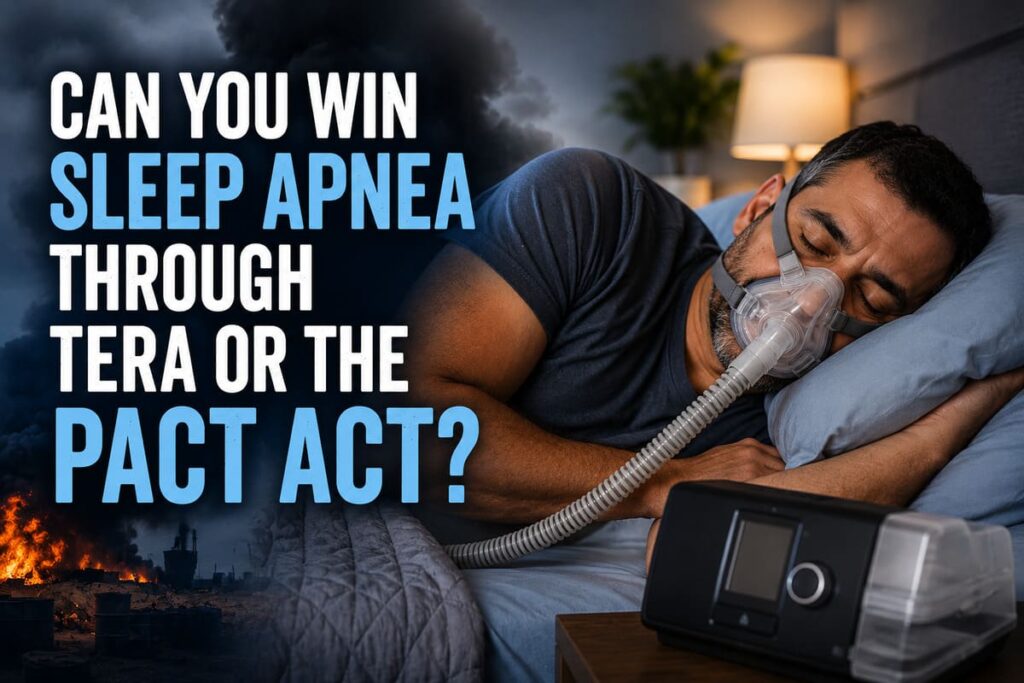
Yes, you can win service connection for sleep apnea through Toxic Exposure Risk Activity (TERA) exposure, even though obstructive sleep apnea isn’t currently a presumptive condition under the PACT Act.
The key is understanding the difference between a presumptive condition and a TERA-based claim. While sleep apnea isn’t presumptive, a recognized TERA can strengthen your claim when backed by strong medical evidence and a detailed nexus letter.
This guide explains how TERA claims work, how sleep apnea may connect to toxic exposure, and what evidence can strengthen your VA claim.
Summary of Key Points
- Sleep apnea isn’t currently a presumptive condition under the PACT Act, but you may still win service connection through TERA.
- A recognized TERA can strengthen your claim, but you still need medical evidence linking sleep apnea to service.
- Many veterans pursue sleep apnea secondary to toxic exposure-related conditions like sinusitis, rhinitis, or asthma.
Table of Contents
What is TERA?
TERA refers to military service that exposed you to hazardous substances or dangerous environments that may lead to long-term health conditions.
Under the PACT Act, the VA must consider toxic exposure when evaluating certain disability claims.
A TERA concession means the VA acknowledges you likely were exposed to harmful substances during service.
Is Sleep Apnea Presumptive Under the PACT Act?
No. Sleep apnea isn’t currently a presumptive condition under the PACT Act.
That means the VA doesn’t automatically connect your sleep apnea to military service simply because you served in a qualifying location or were exposed to toxic hazards.
However, the PACT Act still changed how the VA reviews these claims.
If the VA recognizes your toxic exposure, they may need to obtain a medical opinion addressing whether your exposure contributed to your obstructive sleep apnea.
How TERA Can Support a Sleep Apnea VA Claim
While obstructive sleep apnea isn’t currently an official TERA presumptive condition under the PACT Act, you can still win service connection by proving your toxic exposure contributed to your condition.
If the VA confirms TERA, that can strengthen your claim. Common exposures include burn pits, smoke, particulate matter, oil well fires, and other airborne toxins.
Unlike a presumptive condition, a TERA-based sleep apnea claim still requires a medical nexus connecting your exposure to your condition.
The strongest claims usually include documented exposure along with a detailed medical opinion linking those exposures to respiratory dysfunction, airway inflammation, or other sleep-disordered breathing issues.
What a TERA Concession Means for Respiratory Conditions
A TERA concession doesn’t guarantee approval, but it can remove one major hurdle in the claim process.
Instead of arguing whether exposure happened at all, the focus shifts toward whether the exposure medically contributed to your condition.
This matters for respiratory-related conditions because toxic exposures can affect:
- Airway inflammation
- Nasal obstruction
- Respiratory irritation
- Lung function
- Chronic sinus issues
In some cases, sleep apnea may also qualify as secondary to another service-connected condition tied to toxic exposure, such as chronic rhinitis, sinusitis, asthma, or another respiratory condition.
Can You File Sleep Apnea Secondary to a PACT Act Condition?
Yes, and in many cases, this may be a stronger strategy.
For example, a veteran with service-connected chronic sinusitis, rhinitis, or asthma related to toxic exposure may later develop obstructive sleep apnea.
In those situations, sleep apnea may qualify for secondary service connection rather than direct service connection for toxic exposure.
Secondary service connection often becomes one of the most effective ways to connect sleep apnea back to toxic exposure-related conditions.
How to File a VA Claim for Sleep Apnea
To file a sleep apnea claim tied to TERA or toxic exposure, you generally need:
- A current diagnosis of obstructive sleep apnea
- A sleep study confirming the condition
- Evidence of qualifying toxic exposure or a recognized TERA
- A nexus letter connecting your sleep apnea to toxic exposure or a service-connected condition
- Medical evidence showing symptoms, severity, and functional impact
Many claims are denied because the nexus opinion is weak or missing entirely. A strong medical opinion should clearly explain why it is “at least as likely as not” that your sleep apnea was caused or aggravated by service or another service-connected condition.
Need Clarity for Your Sleep Apnea VA Claim?
Sleep apnea claims tied to TERA or toxic exposure can be difficult to prove without the right medical evidence and strategy.
At VA Claims Insider, our team works with veterans to strengthen medical evidence and build fully developed VA disability claims.
Take the next step toward building a stronger VA claim. You deserve it.
FAQs | Frequently Asked Questions
Does sleep apnea fall under TERA?
Sleep apnea isn’t currently one of the official TERA presumptive conditions. However, the VA may still consider toxic exposure when reviewing your claim if you can show a medical connection between your exposure and obstructive sleep apnea.
Is sleep apnea a PACT presumptive?
No. Obstructive sleep apnea isn’t currently considered a presumptive condition under the PACT Act. That means the VA doesn’t automatically assume your sleep apnea was caused by toxic exposure or military service.
How hard is it to get a VA rating for sleep apnea?
A sleep apnea rating can be difficult without a strong nexus and clear medical evidence. The strongest claims usually include a current diagnosis, sleep study, documented symptoms or exposures, and a medical opinion linking the condition to service.
Can burn pit exposure cause sleep apnea?
The VA doesn’t currently presume that burn pit exposure causes sleep apnea. However, some medical research has linked toxic exposure to airway inflammation, respiratory dysfunction, and sleep-disordered breathing issues that may contribute to obstructive sleep apnea.
Can sleep apnea be secondary to sinusitis or rhinitis?
Yes. Sleep apnea is commonly claimed secondary to chronic sinusitis or allergic rhinitis because those conditions can contribute to airway obstruction and breathing problems during sleep.
Do you need a nexus letter for a TERA sleep apnea claim?
In most cases, yes, because sleep apnea isn’t a presumptive condition under the PACT Act. A strong nexus letter for sleep apnea is often one of the most important pieces of evidence in proving service connection.
What We Believe
Our WHY
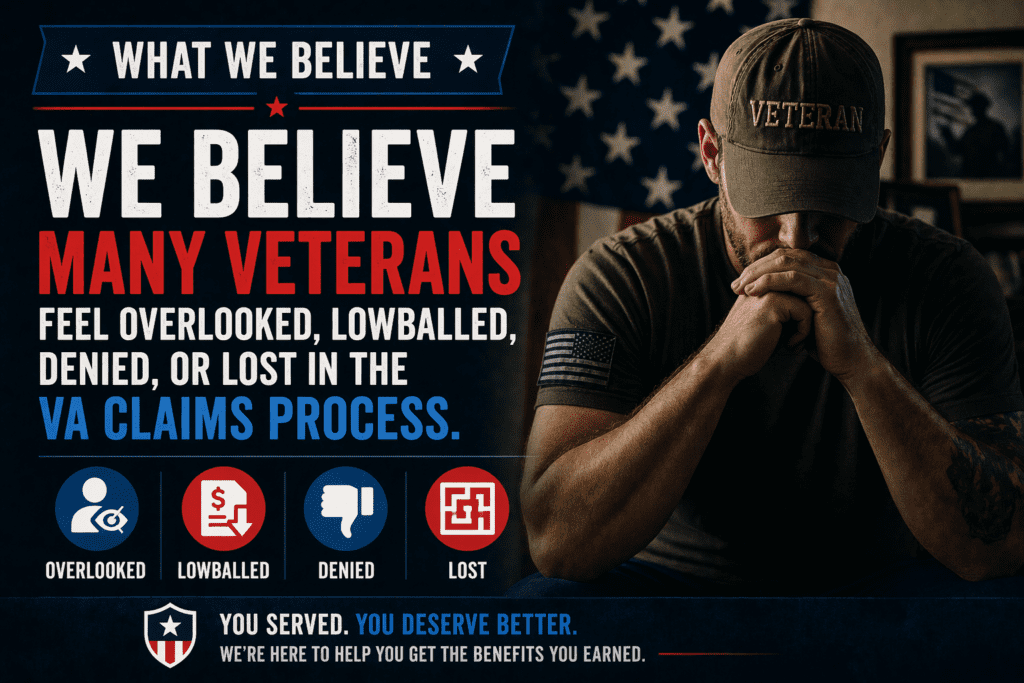
We believe millions of veterans feel overlooked, lowballed, denied, or lost in the VA claims process.
Our purpose is to help underrated disabled veterans rated 0% to 90% create real life change by pursuing the VA disability benefits they legally, morally, ethically, and medically deserve.
We are INSIDERS.
Our HOW
We make the VA disability process easier through expert-level education, proven resources, and veteran-to-veteran support.
You are never alone in this fight.
Our flagship program, VA Claims Insider Elite, connects each veteran with an expert-level Veteran Coach who guides them through our proprietary 8-step process.
That process is built around our SEM Method:
Strategy + Education + Medical Evidence = VA Rating You Deserve!
Our WHAT
We help underrated disabled veterans rated 0% to 90% win, service connect, and increase their VA rating through a smarter strategy, better education, and stronger medical evidence.
YOU SERVED. YOU DESERVE.

Do you have the VA rating you were given…or the VA rating you actually deserve?
Because getting a decision from the VA does not always mean you got the right decision from the VA.
If you are rated anywhere from 0% to 90% and feel stuck, frustrated, underrated, denied, or overlooked, I am speaking directly to you.
And if you have never filed because you thought other veterans deserved it more, because you got denied before, or because you assumed it was too late, do not let those myths make your decision for you.
At VA Claims Insider, we help underrated disabled veterans create real life change by getting the VA rating and compensation they deserve!
Here’s a sliver of what you get when you join us:
- A Veteran Coach by your side, so you never have to fight the VA alone.
- A smarter, personalized strategy for your claim.
- Better VA disability education, so you know what to do next.
- Stronger private medical evidence (DBQs, Nexus Letters, Mental Health Evaluations, and more) at members-only rates to support the rating you deserve.
- And a proven battle plan toward VA claim victory.
But maybe you’re wondering: Will this actually work for me?
That is a fair question.
- At VA Claims Insider, we have helped 50,000+ veterans fight for the VA disability benefits they earned.
- Our internal data shows an average *33% VA rating increase for veterans who complete our Elite program.
- Our internal data also shows veterans in our programs get their claims approved *25% faster on average than the VA’s published average claim-processing timelines.
- Veterans in our community have left 7,000+ total reviews, with a 4.6 out of 5 average rating.
- More than 5,500 reviews are 5 stars ⭐⭐⭐⭐⭐, and 92% of all veteran customer reviews are either 4 or 5 stars.
*Based on VA Claims Insider internal data for veterans who completed the Elite program. Average results shown; individual results vary. No guaranteed outcome or faster claim processing.
If you are ready for a better battle plan, a smarter strategy, and the right path to the VA rating and compensation you deserve, we’ve got your six.
📅 Schedule a Call or click the red button below to get started:
About the Author

Brian Reese
Brian Reese is a world-renowned VA disability benefits expert and the #1 bestselling author of VA Claim Secrets and You Deserve It. Motivated by his own frustration with the VA claim process, Brian founded VA Claims Insider to help disabled veterans secure their VA disability compensation faster, regardless of their past struggles with the VA. Since 2013, he has positively impacted the lives of over 10 million military, veterans, and their families.
A former active-duty Air Force officer, Brian has extensive experience leading diverse teams in challenging international environments, including a combat tour in Afghanistan in 2011 supporting Operation ENDURING FREEDOM.
Brian is a Distinguished Graduate of Management from the United States Air Force Academy and earned his MBA from Oklahoma State University’s Spears School of Business, where he was a National Honor Scholar, ranking in the top 1% of his class.