 go.vaclaimsinsider.com
Looking for Expert-Level VA Claim Answers? Schedule a Call
If your jaw clicks, locks, or throbs every time you eat, talk, or yawn, you already know TMJ isn’t a “minor” problem. It’s a daily fight – and it could qualify you for a VA disability rating and compensation.
Yes, veterans can receive VA disability for TMJ.
The VA rates temporomandibular joint disorder under Diagnostic Code 9905, with ratings from 10% to 50% based on how far you can open your jaw and whether you’re stuck on a restricted diet.
Two veterans with the identical diagnosis can walk away with completely different ratings, and in this guide, I’ll show you exactly why — so you know where you stand before you ever sit down for a C&P exam.
Table of Contents
Summary of Key Points
- TMJ is rated under Diagnostic Code 9905 at 10%, 20%, 30%, 40%, or 50%.
- Your rating comes down to two factors: interincisal range of motion (how wide you can open your mouth, in millimeters) and dietary restrictions.
- You only need to meet one criterion at a given level to earn that rating — not both.
- TMJ can be filed directly or secondary to PTSD, since stress-driven teeth grinding (bruxism) is a well-documented cause.
- Strong evidence — a diagnosis, tracked ROM measurements, and a nexus letter — is what separates a 10% rating from a 50% rating.
What is TMJ?
TMJ (temporomandibular joint disorder) affects the joint connecting your jawbone to your skull (the one you use every time you talk, chew, or swallow). Common symptoms include jaw pain, clicking or popping, a locked jaw, trouble opening your mouth wide, headaches, and earaches. That’s the short version, and it’s really all you need.
What actually decides your claim isn’t the anatomy, it’s how the VA measures your symptoms and converts them into a rating. Let’s get into that.
Can You Get VA Disability for TMJ?
Yes. The VA recognizes TMJ as a rateable disability under Diagnostic Code 9905, and it’s rated at 10%, 20%, 30%, 40%, or 50%. There’s no rating above 50% for TMJ by itself — but that’s not the ceiling on your overall compensation. TMJ often shows up alongside other musculoskeletal conditions or related symptoms like chronic headaches, and depending on your case, those can be evaluated separately.
To get rated, you need three things on file: a current diagnosis, evidence connecting your TMJ to your military service (or to an already-service-connected condition), and documentation showing exactly how your symptoms measure up against the VA’s criteria. That last piece is where most veterans get shortchanged. Not because their TMJ isn’t severe enough, but because their paperwork never captured how bad it really is.
Related: VA ratings for other musculoskeletal and physical conditions.
How the VA Rates TMJ (Diagnostic Code 9905)
This is the section that actually decides your rating, so let’s slow down and get it right.
Under DC 9905, the VA looks at two main factors: how far you can open your jaw (interincisal range of motion) and what kind of diet you’re limited to. Here’s the part veterans miss constantly: you only need to meet one of the criteria at a given level, not all of them, to qualify for that rating.
Interincisal Range of Motion
This is a fancy way of saying “how wide can you open your mouth.” It’s measured in millimeters, from your top front teeth to your bottom front teeth when your mouth is open as far as it goes. A dentist, oral surgeon, or C&P examiner measures this directly (it’s not something you self-report or ‘eyeball’).
Generally, the ranges break down like this:
- 30–34mm — mild limitation
- 21–29mm — moderate limitation
- 11–20mm — significant limitation
- 0–10mm — severe limitation
Dietary Restrictions
The VA also looks at what you can actually eat. There are three tiers: a regular diet (no restrictions), a mechanically altered diet (food that’s chopped, blended, or softened), and a liquid diet. If your dentist or doctor has written into your medical records that you’re on a modified diet because of your jaw – not just because you mentioned it to the C&P examiner that one day – it counts toward your rating.
This point trips up a lot of veterans. Telling the examiner “I can only eat soft foods” during your one appointment isn’t the same as having your treating dentist document that restriction over time. The VA wants a documented pattern, not a single statement made in passing.
Painful Motion and Lateral Excursion
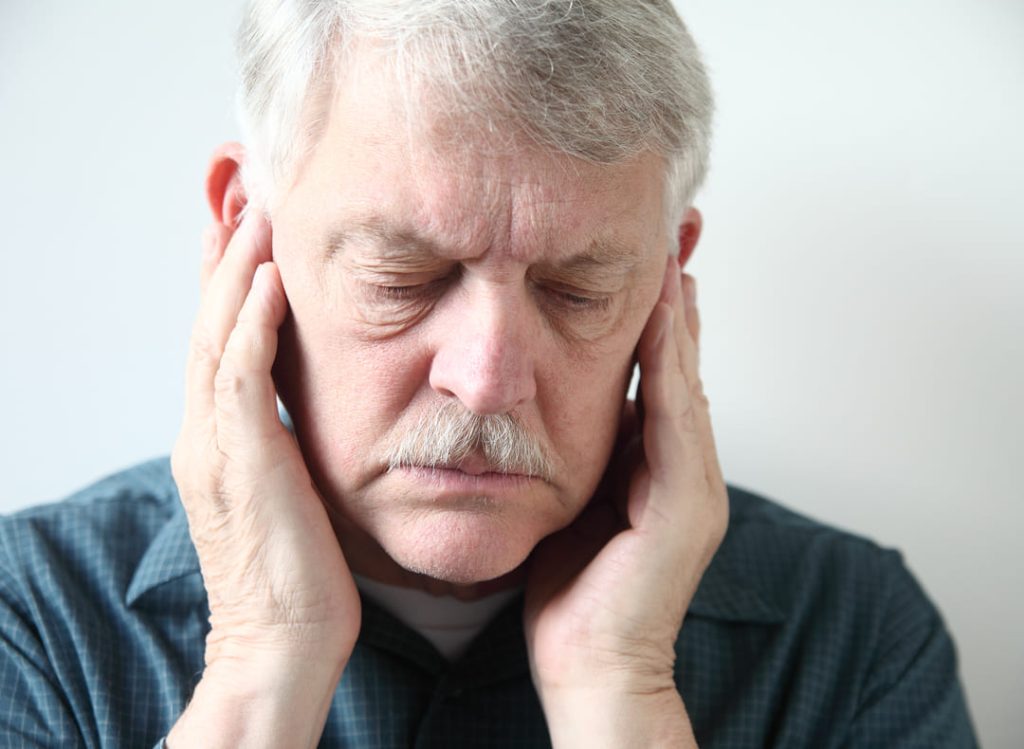
Pain matters too. Under VA’s painful motion rule, if movement is painful, that motion counts as limited — even if you technically have some range left. So if you can open your jaw 32mm but it hurts through the whole motion, you may still qualify for a higher rating than the raw number alone suggests.
Lateral excursion — how far your jaw moves side to side — factors in as well, though less prominently than vertical opening. Reduced lateral movement, especially under 4mm, can support a rating on its own.
Why Two Veterans With TMJ Get Different Ratings
Here’s the piece most articles skip entirely: two veterans can have the exact same diagnosis and walk away with completely different ratings, because the rating isn’t based on the diagnosis — it’s based on the documented severity of your specific symptoms.
Veteran A gets diagnosed, never has his jaw opening measured in millimeters, and never gets his soft-food diet written into his chart. He shows up to his C&P exam with nothing solid on paper. Result: he risks landing at 10%, or getting shortchanged entirely.
Veteran B has his dentist track interincisal measurements across several visits, documents a mechanically altered diet in his records, and brings a nexus letter tying it all back to service. Same condition. Dramatically stronger claim. That’s the whole game with TMJ — the diagnosis gets you in the door, but the measurements and documentation get you the rating.
TMJ VA Rating Chart
Here’s how it all comes together. Remember, you only need to meet one criterion at each level — not every one listed.
| VA Rating | Jaw Opening (Interincisal) | Diet |
| 50% | 0–10mm | Dietary restrictions present |
| 40% | 0–10mm, or 11–20mm, or 21–29mm | No restrictions / some restrictions / liquid diet |
| 30% | 11–20mm, or 21–29mm, or 30–34mm | No restrictions / soft-food restrictions / liquid diet |
| 20% | 21–29mm, or 30–34mm | No restrictions / soft-food restrictions |
| 10% | 30–34mm, or lateral movement 0–4mm | No restrictions |
Can TMJ Be Secondary to PTSD?
Yes, and this is one of the most overlooked paths to a TMJ rating.
Bruxism (teeth grinding) is a well-documented symptom of PTSD and chronic stress. If you’ve been grinding your teeth at night for years because of hypervigilance, nightmares, or combat-related anxiety, that grinding puts constant strain on your jaw joint and surrounding muscles. Over time, that strain can develop into full-blown TMJ.
Here’s the chain: PTSD causes stress and muscle tension → stress leads to bruxism (often at night, so you may not even realize it’s happening) → years of grinding wears down your jaw joint → TMJ develops. Anxiety plays a role here too — tense jaw and neck muscles can aggravate symptoms even without full-blown grinding at play. If anxiety or mental health ratings are part of your service-connected picture, it’s worth reviewing whether that connection extends to your jaw.
If your PTSD is already service-connected, filing TMJ as secondary is often easier than filing it as a standalone, direct claim. You’re not trying to prove your jaw problem happened in service — you’re proving your already-connected PTSD is, as the standard goes, “at least as likely as not” the cause of your TMJ.
That’s the legal bar for secondary service connection, and a nexus letter from a provider familiar with the bruxism-TMJ link is the centerpiece of this kind of claim.
Evidence That Strengthens a TMJ Claim
Your evidence is what turns “I have TMJ” into “here’s my documented rating.” Focus on stacking:
- A current diagnosis from a dentist, oral surgeon, or ENT — not a self-diagnosis, not a guess.
- ROM measurements tracked over time, not just once, showing your interincisal opening in millimeters.
- Dietary restriction documentation written into your treatment records by a provider, not just mentioned verbally at an appointment.
- A DBQ (Disability Benefits Questionnaire) completed by your provider, giving the VA a structured summary of your symptoms.
- Your C&P exam — go in prepared, be honest about your worst days, and don’t downplay your symptoms to seem tough.
- A nexus letter connecting your TMJ to service, or to an already-service-connected condition like PTSD.
- Lay statements and buddy statements from people who’ve watched you struggle — a spouse who’s seen you avoid solid foods, a battle buddy who remembers your jaw pain starting downrange.
The more of these you stack, the harder it becomes for the VA to justify a low rating or a denial.
Common Mistakes Veterans Make
A few habits quietly cost veterans a fair rating:
- Skipping treatment during service. Waiting until after you separate to get your jaw pain evaluated makes it much harder to link TMJ back to your time in uniform.
- Filing an incomplete claim. A Fully Developed Claim — diagnosis, nexus, and current symptoms all submitted upfront — moves faster than one the VA has to chase down evidence for. Learn the full process in our VA Claim Guide.
- Not knowing the rating criteria before the C&P exam. If you don’t know what the examiner is measuring, you can’t make sure it gets documented accurately.
- Ignoring the PTSD connection. Veterans with service-connected PTSD who grind their teeth often skip filing TMJ as secondary, leaving a legitimate rating on the table.
Conclusion
TMJ is real, it’s ratable, and you deserve a rating that reflects what you’re actually dealing with — not a lowball number because your paperwork didn’t tell the full story. Get diagnosed, get your jaw measurements and diet restrictions documented over time, connect the dots with a nexus letter, and don’t sleep on a secondary PTSD claim if teeth grinding is part of your story. Stack enough service-connected conditions like this together, and you may be closer to 100% VA disability than you think.
That’s how you build a TMJ claim the VA can’t easily wave off. If you want help pulling this evidence together the right way, our team is standing by.
NEED MORE ASSISTANCE? We’ve Got Your SIX!

Most veterans are underrated for their disabilities and, therefore, not getting their due compensation. At VA Claims Insider, we help you understand and take control of the claims process, so you can get the rating and compensation you’re owed by law.
Our process takes the guesswork out of filing a VA disability claim and supports you every step of the way in building a fully-developed claim (FDC) — so you can get the rating you deserve in less time!
If you’ve filed your VA disability claim and have been denied or have received a low rating — or you’re unsure how to get started — reach out to us! Take advantage of a VA Claim Discovery Call. Learn what you’ve been missing — so you can FINALLY get the disability rating and compensation YOU DESERVE!
We’ve helped 50,000+ veterans get what they deserve. Are you next?
FAQs | Frequently Asked Questions
What is the VA rating for TMJ?
The VA rates TMJ under Diagnostic Code 9905 at 10%, 20%, 30%, 40%, and 50%.
Can I get VA disability for TMJ without a formal diagnosis?
No. To receive a VA rating for TMJ, you must have a current, documented diagnosis from a qualified provider (for example, a dentist, oral surgeon, or ENT specialist). Without that formal diagnosis in your medical records, the VA will not rate your condition—even if you report symptoms during your C&P exam.
How fast can I expect a decision if I file a Fully Developed Claim (FDC)?
If you submit an FDC—including your TMJ diagnosis, a nexus letter, and evidence of your symptoms—the average turnaround time for a decision is 3–4 months. This is significantly quicker than a standard claim, where the VA must gather records on your behalf and can take 9–12 months or more.
What medical tests does the VA use to rate TMJ?
The VA measures interincisal opening (how many millimeters you can open your jaw) and notes any dietary restrictions (everyday foods vs. mechanically altered or liquid diets). In some cases, they may also consider reports of painful motion. You’ll likely have to demonstrate these limits during your C&P exam—and have them documented in your treatment records—to qualify for each rating level.
Can I claim TMJ secondary to PTSD or other service-connected conditions?
Yes. If you suffer from service-connected PTSD (or another condition) that causes teeth grinding or muscle tension leading to TMJ, you can file for secondary service connection. You’ll need a medical nexus letter showing it is “at least as likely as not” that your PTSD exacerbated or caused your TMJ.
What is the highest TMJ VA rating?
50%, awarded when you can open your jaw only 0–10mm and you have documented dietary restrictions.
Does painful motion qualify for a rating?
es. Under the painful motion rule, pain during movement can support a rating even when your measured range of motion alone might not.
Content Reviewed By

Quality Assurance Team
The Quality Assurance (QA) team at VA Claims Insider has extensive experience researching, fact-checking, and ensuring accuracy in all produced content. The QA team consists of individuals with specialized knowledge in the VA disability claims adjudication processes, laws and regulations, and they understand the needs of our target audience. Any changes or suggestions the QA team makes are thoroughly reviewed and incorporated into the content by our writers and creators.
About the Author

Brian Reese
Brian Reese is a world-renowned VA disability benefits expert and the #1 bestselling author of VA Claim Secrets and You Deserve It. Motivated by his own frustration with the VA claim process, Brian founded VA Claims Insider to help disabled veterans secure their VA disability compensation faster, regardless of their past struggles with the VA. Since 2013, he has positively impacted the lives of over 10 million military, veterans, and their families.
A former active-duty Air Force officer, Brian has extensive experience leading diverse teams in challenging international environments, including a combat tour in Afghanistan in 2011 supporting Operation ENDURING FREEDOM.
Brian is a Distinguished Graduate of Management from the United States Air Force Academy and earned his MBA from Oklahoma State University’s Spears School of Business, where he was a National Honor Scholar, ranking in the top 1% of his class.