
 go.vaclaimsinsider.com
Looking for Expert-Level VA Claim Answers? Schedule a Call
Can VA take away service connection after granting it? Yes—but only in rare cases, and VA has a high legal burden before it can sever your benefits.
Service connection is the foundation of a VA disability claim. When VA grants service connection, it is saying your disability is linked to your military service. That service-connected status is what allows VA to assign a disability rating and pay monthly compensation.
But in rare cases, VA can try to take service connection away completely. This is called severance of service connection.
Severance is not the same thing as a VA rating reduction. A rating reduction lowers your percentage of disability. Severance removes the connection between your disability and military service. VA is telling you: “We should not have granted service connection in the first place.”
That is a serious adverse action. But VA cannot sever service connection just because it changed its mind, disagrees with a prior rater, or now views the evidence differently. Under 38 CFR 3.105(d), service connection may generally be severed only where the evidence establishes that the prior grant was clearly and unmistakably erroneous, with the burden of proof on the government not the veteran.
Okay, let’s explore exactly when VA can—and cannot—sever service connection.
Table of Contents
Summary of Key Points
- VA can sever service connection—but only in limited cases. VA generally must prove the original grant was clearly and unmistakably erroneous, not merely that a different rater would decide it differently today.
- Severance is not the same as a rating reduction. A reduction lowers the percentage; severance removes the service-connected status entirely, which can affect compensation, secondary claims, and related benefits.
- Veterans have important protections. VA must provide due process, give notice, allow time to submit evidence, and the 10-year rule may protect long-standing service connection from being severed except in narrow situations.
- VA must consider every valid theory before severing. Under the May 13, 2026 M21-1 update, VA should not sever service connection unless it cannot be granted or maintained under any theory reasonably raised by the record.
What Does “Severance of Service Connection” Mean?
Severance means VA removes service-connected status for a disability.
If VA severs service connection, the condition is no longer treated as related to military service. That can affect the veteran’s combined rating, monthly compensation, secondary claims, Special Monthly Compensation, dependents’ benefits, VA healthcare eligibility tied to that condition, and other ancillary benefits.
For example, if a veteran is service connected for migraines at 50%, a rating reduction might lower the migraines rating from 50% to 30% or 0%. But if VA severs service connection, VA is saying the migraines should not be service connected at all.
That is why proposed severance should be taken seriously and challenged carefully when VA gets it wrong.
The Main Rule: VA Must Prove Clear and Unmistakable Error
The primary legal standard for severance is found in 38 CFR 3.105(d).
VA must show that the prior service connection grant was clearly and unmistakably erroneous. VA must also prepare a proposed rating decision explaining all material facts and reasons, notify the veteran, and provide 60 days to submit evidence showing service connection should be maintained.
A clear and unmistakable error, often called CUE, is not a normal disagreement. It is not “the evidence could have gone either way.” It is not “a different rater would have denied the claim.” CUE is a much higher standard.
The key question is whether the prior grant was so clearly wrong that reasonable minds could not disagree.
Pro Tip: Attack the Word “Undebatable”
In a severance case, one of the strongest arguments is often simple: the original grant was not undebatably wrong. If a reasonable VA rater could have granted service connection based on the evidence, VA may have a problem meeting the severance standard.
Important Accuracy Point: VA Can Consider Later Evidence
There is an important distinction veterans need to understand.
A veteran’s normal CUE challenge under 38 CFR 3.105(a) is generally based on the record and law that existed at the time of the original decision.
However, VA’s May 13, 2026 updated M21-1 guidance explains that severance can consider both evidence of record at the time of the prior decision and evidence received after that time.
That means VA can rely on later-developed evidence in a severance review. But VA still carries the burden of proving the high severance standard is met.
May 13, 2026 M21-1 Update: VA Must Consider Every Theory Before Severing Service Connection
The most important takeaway from VA’s May 13, 2026 M21-1 update is this:
Before severing service connection, VA must show that service connection cannot be granted or maintained under ANY theory of entitlement, whether raised by the veteran or reasonably raised by the record.
That is a powerful protection for veterans.
It means VA should not sever service connection just because one theory fails. For example, if direct service connection is weak, VA still needs to consider whether the condition can be maintained under another valid theory.
That could include:
- Direct service connection
- Secondary service connection
- Aggravation
- Presumptive service connection
- Chronicity or continuity of symptoms
- Toxic exposure
- Medication side effects
- Altered gait or biomechanical chain
- Obesity as an intermediate step
- Another theory reasonably raised by the evidence
Pro Tip: Do Not Defend Only the Original Theory
If VA proposes severance, do not only defend the theory VA originally used to grant the claim. The better strategy is to show that service connection can still be maintained under at least one valid theory supported by the record.
When Can VA Sever Service Connection?
1. When the Prior Grant Was Clearly and Unmistakably Erroneous
This is the most common severance basis: VA made a Clear and Unmistakable Error (CUE).
For example, VA granted service connection for a back condition, but the evidence clearly showed no in-service event, no nexus, no continuity, no presumptive basis, no secondary relationship, and no other legal path to service connection.
Even then, VA must prove more than “we would decide this differently today.” VA must prove the grant was clearly and unmistakably wrong.
2. When a Diagnosis Change Shows the Original Diagnosis Was Clearly Erroneous
A change in diagnosis can support severance, but VA must meet a specific standard.
Under 38 CFR 3.105(d), a change in diagnosis may support severance only if an examining physician, physicians, or other proper medical authority certifies that, in light of all accumulated evidence, the diagnosis on which service connection was based was clearly erroneous. That certification must include a summary of the facts, findings, and reasons supporting the conclusion.
For example, VA granted service connection for PTSD. Years later, VA says the veteran does not meet the criteria for PTSD. That alone should not end the analysis. VA still must address whether another acquired psychiatric condition could support continued service connection.
Pro Tip: Do Not Let VA Play Diagnosis Label Games
Medical diagnoses can evolve, especially with mental health conditions. The better question is not always whether the original label was perfect. The better question is whether the veteran’s current disability picture can still be linked to service under a valid theory of entitlement.
3. When the Grant Was Clearly Illegal
VA’s May 13, 2026 M21-1 guidance also addresses clearly illegal grants.
If there was no legal entitlement to the original award, VA is not required to apply the CUE provisions of 38 CFR 3.105(d). VA must still provide due process, propose severance, and notify the claimant that there was no legal entitlement to the prior grant.
For example, VA may sever service connection as clearly illegal if the beneficiary had no qualifying active duty service to establish basic eligibility for VA benefits.
This is different from a medical evidence dispute. This is a legal eligibility problem.
The VA 10-Year Protection Rule
One of the strongest protections for veterans is found in 38 CFR 3.957: it’s called the VA 10-Year Rule.
If service connection has been in effect for 10 or more years, VA generally cannot sever it unless the original grant was based on fraud or military records clearly show the person lacked the required service or character of discharge.
The 10-year period runs from the effective date of service connection to the effective date of the rating decision severing service connection.
Pro Tip: Always Check the Effective Date First
If a condition has been service connected for 10 or more years, the veteran may have powerful protection even if VA later believes the original grant was wrong.
VA Must Provide Due Process Before Severance
VA must give veterans due process before severing service connection.
Under 38 CFR 3.103, claimants have the right to written notice, the right to a hearing, and the right to representation. VA generally cannot terminate, reduce, or otherwise adversely affect benefits unless the beneficiary receives advance notice and has 60 days to submit evidence showing the adverse action should not be taken.
VA must issue a proposed severance decision with detailed reasons and give the veteran 60 days to submit evidence. If VA finalizes severance, the award is reduced or discontinued effective the last day of the month in which a 60-day period from the date of notice of the final rating action expires.
38 CFR 3.500(r) also addresses the effective date rules for severance of service connection.
What About Secondary Claims, Increases, and Ancillary Benefits?
VA’s May 13, 2026 M21-1 guidance also addresses what happens when a veteran has an increased rating claim, secondary service connection claim, or ancillary benefit tied to a condition VA believes was granted in error.
If VA determines the underlying service-connected disability was granted in error and requires severance under 38 CFR 3.105(d), VA guidance says not to award an increase, secondary service connection, or ancillary benefits based on that erroneously granted disability. Instead, VA should propose severance and defer the related issue until the severance question is resolved.
However, if other service-connected disabilities have increased in severity, VA should still award increased compensation for those other conditions even if severance is proposed for a separate disability.
What to Do If VA Proposes Severance of Service Connection
If VA sends a proposed severance letter, do not ignore it. Severance means VA is trying to remove service connection entirely—not just lower your rating. This is a big deal.
Step #1: Identify VA’s Exact Reason
Read the proposed decision carefully. Is VA claiming clear and unmistakable error, a diagnosis change, no legal entitlement, or a service record problem? Your response should directly attack VA’s specific reason for severance.
Step #2: Check the 10-Year Rule
Look at the effective date of service connection. If the condition has been service connected for 10 or more years, 38 CFR 3.957 may protect it from severance except in limited situations, such as fraud or lack of qualifying service. This is called the VA 10-year rule.
Step #3: Submit Evidence Within 60 Days
VA generally gives you 60 days to submit evidence showing why service connection should continue. Useful evidence may include medical opinions, treatment records, service records, lay statements, buddy statements, medical literature, or evidence supporting another theory of entitlement.
Step #4: Consider Requesting a Predetermination Hearing
You can request a predetermination hearing within 30 days from the date of VA’s notice. A hearing can help clarify the record and explain why service connection should be maintained. You do not need a lawyer to request one, but accredited help may be wise because severance is high-stakes.
Step #5: Defend Every Valid Theory
Do not defend only the original theory VA used to grant the claim. The goal is to show service connection can still be maintained under at least one valid theory, including direct, secondary, aggravation, presumptive, chronicity, continuity, toxic exposure, medication side effects, or another theory reasonably raised by the record. Under VA’s May 13, 2026 M21-1 update, VA must consider whether service connection can be granted or maintained under ANY valid theory before severance is proper.
Final Thoughts
VA can sever service connection, but the standard is high.
The government carries the burden. VA must provide due process. A simple disagreement is not enough. A new medical opinion is not automatically enough. A different rater reaching a different conclusion is not enough.
And under VA’s May 13, 2026 M21-1 guidance, VA must consider whether service connection can be granted or maintained under any theory of entitlement before severance is proper.
If VA proposes severance, act quickly. Read the letter carefully. Watch the deadlines. Gather evidence. Look for every possible theory that supports service connection.
Because once VA grants service connection, it should not be taken away unless VA can prove the law truly allows it.
Primary Sources
- 38 CFR 3.105 – Revision of Decisions
- 38 CFR 3.103 – Procedural Due Process and Appellate Rights
- 38 CFR 3.957 – Service Connection
- 38 CFR 3.500 – General Effective Dates
- VA M21-1, Part X, Subpart ii, Chapter 5, Section B – Severance of Service Connection, updated May 13, 2026
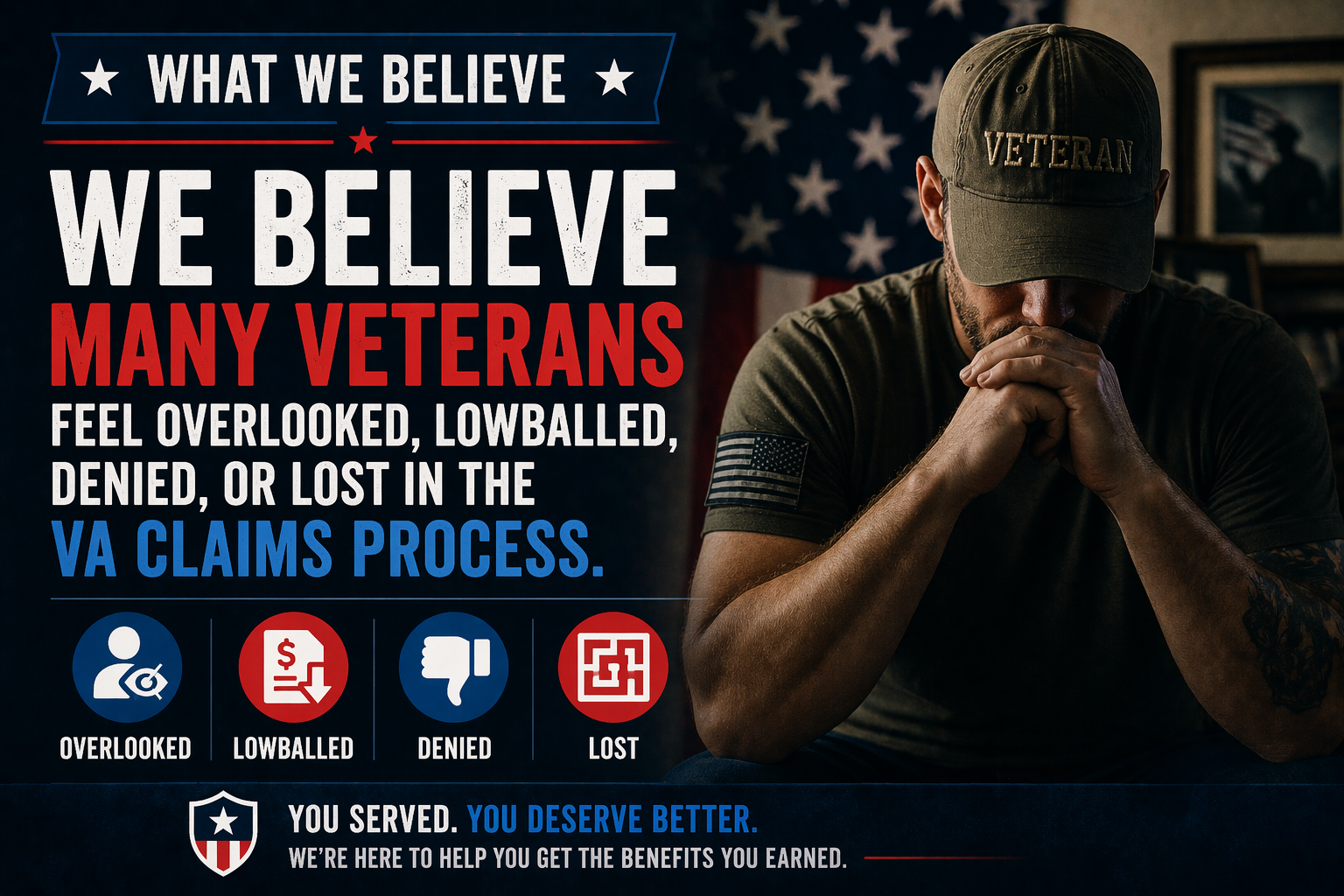
What We Believe
Our WHY
We believe millions of veterans feel overlooked, lowballed, denied, or lost in the VA claims process.
Our purpose is to help underrated disabled veterans rated 0% to 90% create real life change by pursuing the VA disability benefits they legally, morally, ethically, and medically deserve.
We are INSIDERS.
Our HOW
We make the VA disability process easier through expert-level education, proven resources, and veteran-to-veteran support.
You are never alone in this fight.
Our flagship program, VA Claims Insider Elite, connects each veteran with an expert-level Veteran Coach who guides them through our proprietary 8-step process.
That process is built around our SEM Method:
Strategy + Education + Medical Evidence = VA Rating You Deserve!
Our WHAT
We help underrated disabled veterans rated 0% to 90% win, service connect, and increase their VA rating through a smarter strategy, better education, and stronger medical evidence.
YOU SERVED. YOU DESERVE.

Do you have the VA rating you were given…or the VA rating you actually deserve?
Because getting a decision from the VA does not always mean you got the right decision from the VA.
If you are rated anywhere from 0% to 90% and feel stuck, frustrated, underrated, denied, or overlooked, I am speaking directly to you.
And if you have never filed because you thought other veterans deserved it more, because you got denied before, or because you assumed it was too late, do not let those myths make your decision for you.
At VA Claims Insider, we help underrated disabled veterans create real life change by getting the VA rating and compensation they deserve!
Here’s a sliver of what you get when you join us:
- A Veteran Coach by your side, so you never have to fight the VA alone.
- A smarter, personalized strategy for your claim.
- Better VA disability education, so you know what to do next.
- Stronger private medical evidence (DBQs, Nexus Letters, Mental Health Evaluations, and more) at members-only rates to support the rating you deserve.
- And a proven battle plan toward VA claim victory.
But maybe you’re wondering: Will this actually work for me?
That is a fair question.
- At VA Claims Insider, we have helped 50,000+ veterans fight for the VA disability benefits they earned.
- Our internal data shows an average *33% VA rating increase for veterans who complete our Elite program.
- Our internal data also shows veterans in our programs get their claims approved *25% faster on average than the VA’s published average claim-processing timelines.
- Veterans in our community have left 7,000+ total reviews, with a 4.6 out of 5 average rating.
- More than 5,500 reviews are 5 stars ⭐⭐⭐⭐⭐, and 92% of all veteran customer reviews are either 4 or 5 stars.
*Based on VA Claims Insider internal data for veterans who completed the Elite program. Average results shown; individual results vary. No guaranteed outcome or faster claim processing.
If you are ready for a better battle plan, a smarter strategy, and the right path to the VA rating and compensation you deserve, we’ve got your six.
📞 Click the red button below to get started:
Content Reviewed By

Quality Assurance Team
The Quality Assurance (QA) team at VA Claims Insider has extensive experience researching, fact-checking, and ensuring accuracy in all produced content. The QA team consists of individuals with specialized knowledge in the VA disability claims adjudication processes, laws and regulations, and they understand the needs of our target audience. Any changes or suggestions the QA team makes are thoroughly reviewed and incorporated into the content by our writers and creators.
About The Author

Brian Reese
Brian Reese is a world-renowned VA disability benefits expert and the #1 bestselling author of VA Claim Secrets and You Deserve It. Motivated by his own frustration with the VA claim process, Brian founded VA Claims Insider to help disabled veterans secure their VA disability compensation faster, regardless of their past struggles with the VA. Since 2013, he has positively impacted the lives of over 10 million military, veterans, and their families.
A former active-duty Air Force officer, Brian has extensive experience leading diverse teams in challenging international environments, including a combat tour in Afghanistan in 2011 supporting Operation ENDURING FREEDOM.
Brian is a Distinguished Graduate of Management from the United States Air Force Academy and earned his MBA from Oklahoma State University’s Spears School of Business, where he was a National Honor Scholar, ranking in the top 1% of his class.